DESIGNING AROUND COURTYARDS
Courtyards have long formed an important part of residential architecture, particularly within climates that encourage connection to outdoor living. Within Western Australia, where natural light, cross ventilation, and seasonal outdoor use play such an important role in everyday life, courtyards can become far more than simply outdoor spaces. They often become the organisational and environmental centre of the home.
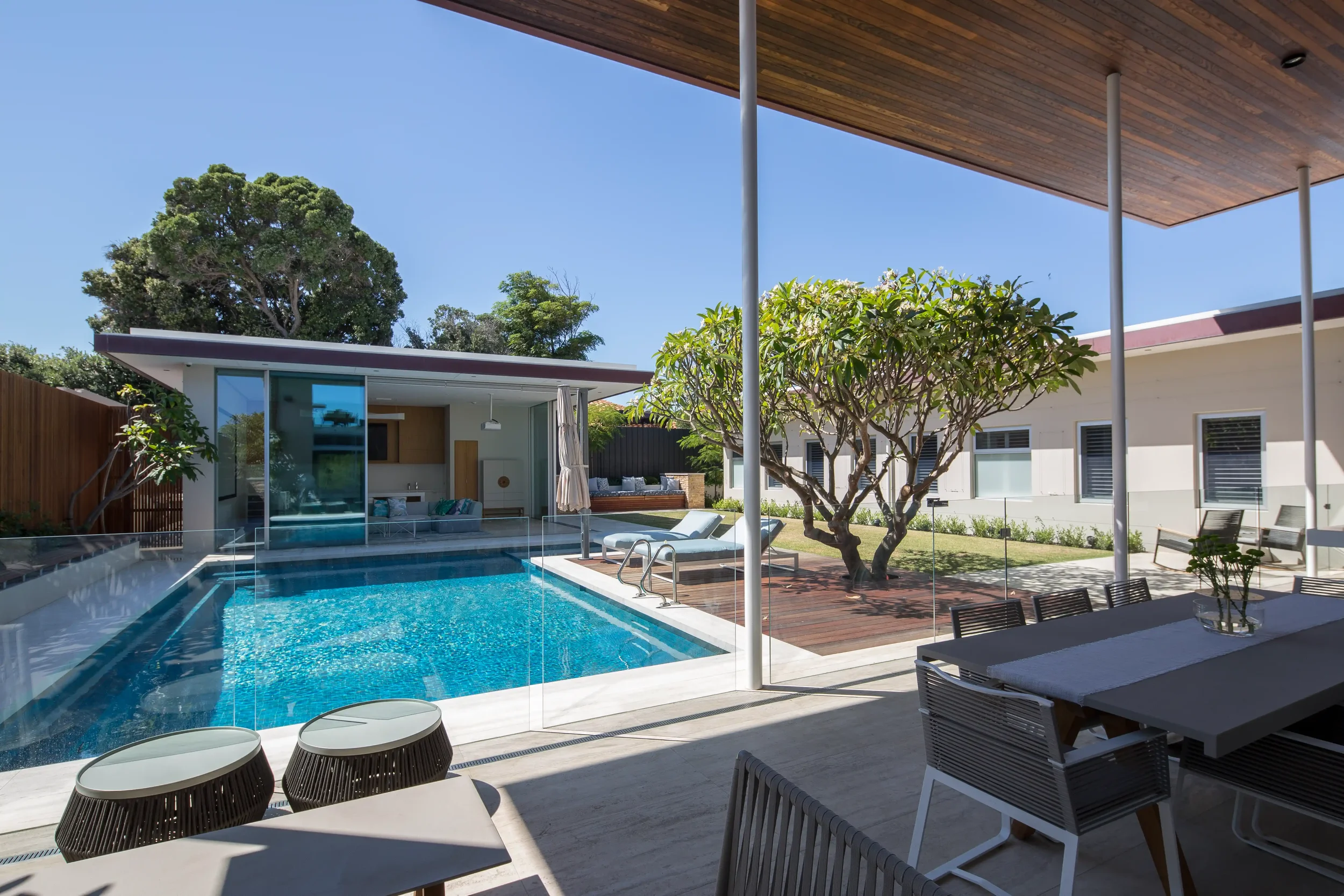
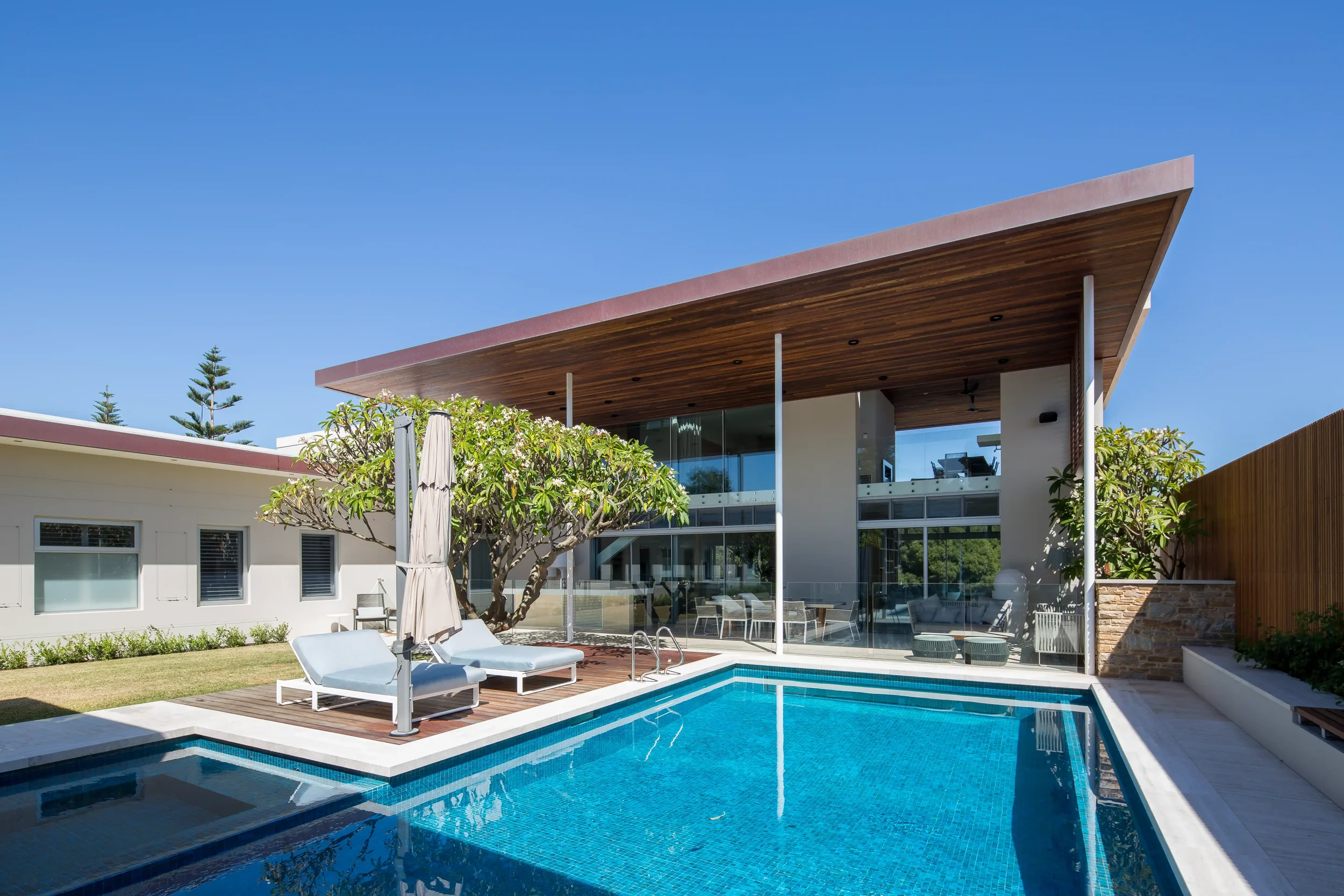
At Hofman Studio, we frequently use courtyards as a way of shaping how a home feels, functions, and connects to its surrounding environment. Rather than positioning outdoor areas only at the perimeter of a site, courtyards allow landscape, light, and ventilation to be brought deep into the centre of the home.
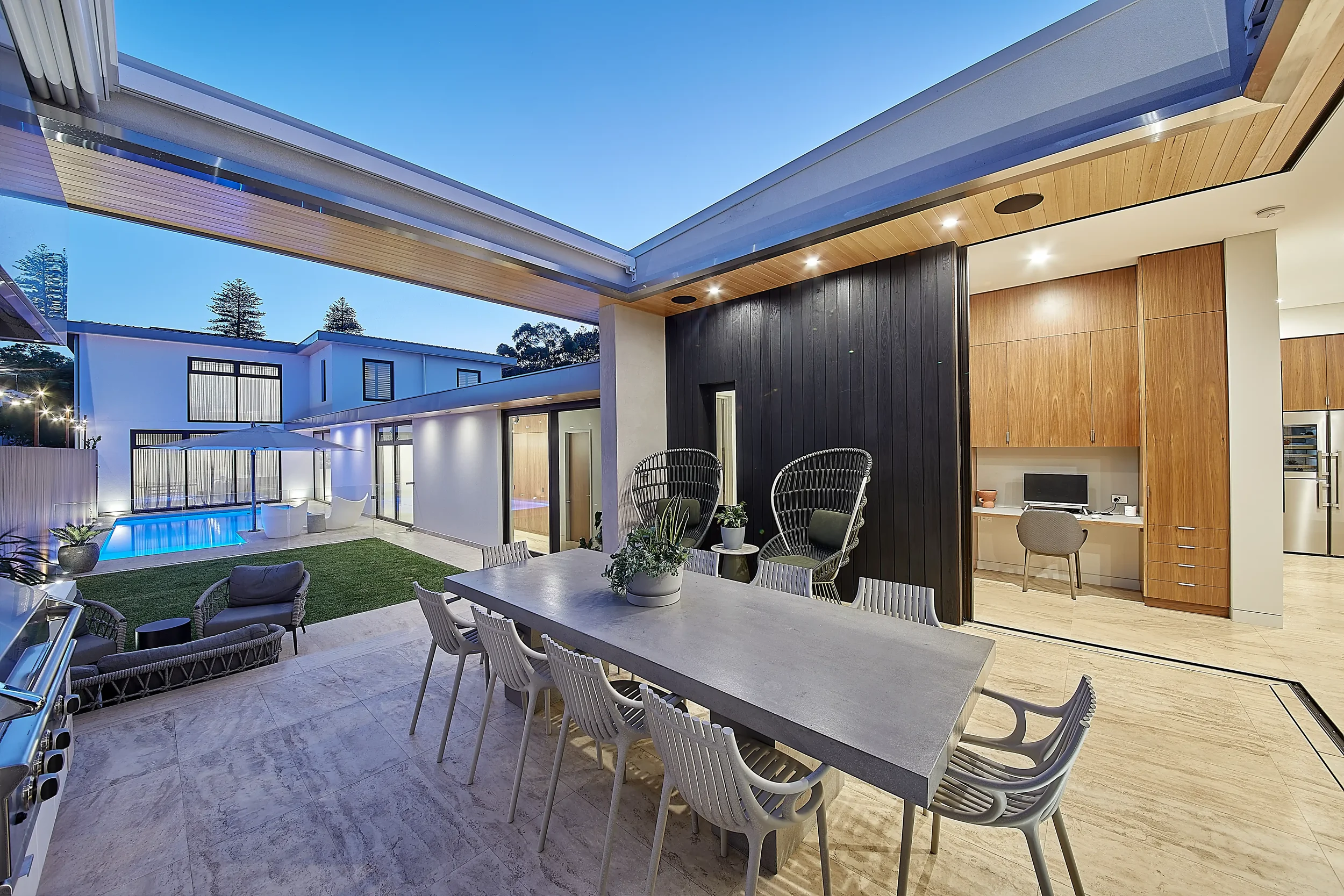
Within the Perth climate, courtyards also allow outdoor spaces to be carefully protected from prevailing coastal winds while still maintaining strong connection to light, air, and landscape. These sheltered outdoor areas create more comfortable spaces for everyday living and allow homes to open naturally to the outdoors throughout much of the year.
Courtyards can create privacy within dense suburban environments while still allowing generous natural light and open living spaces. They also assist with passive environmental performance by improving cross ventilation, encouraging airflow, and allowing winter sun into adjacent rooms while providing sheltered outdoor spaces throughout the year.
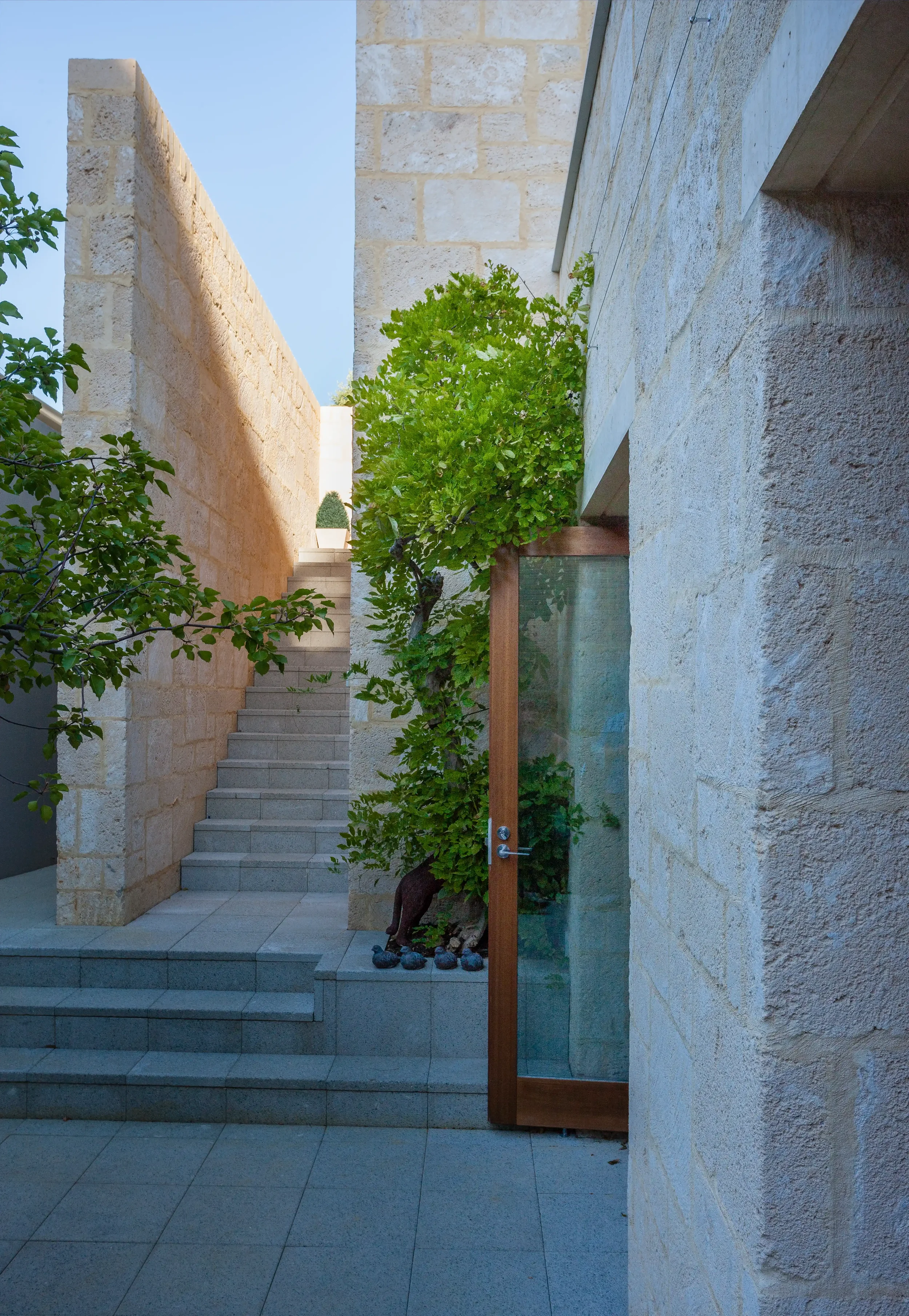
Beyond their environmental benefits, courtyards also contribute strongly to the atmosphere and experience of a home. They create moments of calm, frame views to landscape, and establish changing relationships between interior and exterior spaces throughout the day and seasons.
Many of our projects are organised around central courtyards or a series of smaller outdoor spaces, allowing the architecture to feel more connected to landscape, natural light, and outdoor living. This layered relationship between built form and outdoor space is fundamental to our approach to residential architecture and reflects the way many people choose to live within the Western Australian climate.